| Tired of Reading? Please listen to the blog  |
Blog Summary
The medical profession in South Africa is an ever-growing field with several opportunities and offers the best pay. To gain entry into medical schools, aspiring students should have completed grade12 with high scores in the core subjects and NBT test. MBChB program in South Africa takes six years and a specialization takes about 2 – 4 years. As per HPCSA regulation, medical graduates should take up one year each of community service and internship. Alternatively, South African students can pursue MBChB courses in Zambia. TAU is one of the leading medical schools in Zambia offering programs with affordable cost, state-of-the-art infrastructure, excellent training, qualified faculty, well-equipped laboratories and an international standard curriculum.
- Shortage of Doctors in South Africa
- How to Become a Doctor in South Africa
- Requirements to Become a Doctor in South Africa
- National Benchmark Tests Requirements to Become a Doctor in South Africa
- Score Weightage Requirements to Become a Doctor in South Africa
- What If You Don’t Make the Cut?
- After Joining Your MBChB
- Final Step to Become a Doctor in South Africa
- Study Medicine Abroad: An Alternative Options for South African Students
- How Long Will It Take to Become a Doctor in South Africa?
- Why Zambia Is the Best Destination to Study Medicine Abroad?
- How to Choose the Best Medical School in Zambia
The South African health sector has evolved over the years. It has become a fast-paced industry that contributes to the nation’s economy. Taking up medicine in South Africa as a profession is prestigious. It is a significant sector dominated by private players who cater to middle- as well as high-income households. They are members of medical schemes that make up about 30% of the economy.
The sector comprises both government and private players. The medical industry also attracts most countries and even the continent’s medical professionals. However, the Health Professions Council of South Africa’s (HPCSA’s) regulations could leave many medical professionals unqualified. This includes internationally trained South African doctors too.
Though all is not lost according to the HPCSA’s policy guidelines published in July. South African citizens who graduated from foreign qualifications can now apply for one year to a South African university to complete an internship at local hospitals.
South Africa’s health department has overall responsibility for healthcare in the country. It operates nearly 400 public hospitals, with specific responsibilities in the public sector. It also regulates 211 private hospitals. Also, the government intends to introduce a system of national health insurance, which was initiated in 2012.
Shortage of Doctors in South Africa
The shortage of doctors and nurses in Africa has been a decade-old problem even cited publicly by the health minister Dr. Zweli Mkhize. He also pointed out that this situation can benefit from more doctors. Subsequently, it will reduce the workload for other medical professionals and improve the quality of care.
Many students dream about pursuing Medicine in South Africa. Yet, capable candidates are often denied a chance in South Africa due to unstable regulation and a lack of opportunities. Though it is not hard for one can pursue a career in medicine in South Africa, it is a taxing endeavor both mentally and financially. One can easily spend 5–8 years and on average R64,200 just for the first year pursuing medicine in South Africa.
Some of the main reasons why medicine in South Africa is so desirable is because it is:
- One of the best-paid professions in the country
- An ever-growing sector with a lot of demand
- A great way to contribute to the country and its people
- Capable of opening up a wave of opportunities locally and abroad
- Studying medicine in South Africa will provide desirability and respect among peers
Do you wish to contribute to this cause and also place yourself on a successful and well-paid career path? Here is how you can practice medicine in South Africa after completing MBChB abroad.
How to Become a Doctor in South Africa
Are you wondering how to become a doctor in South Africa? This article will explain in detail how you can become a doctor in South Africa for your convenience.
To become a doctor in South Africa, you must plan your educational journey right from the schooling stage. If you fail to do so, you will have to take up additional courses to make yourself eligible to get into a medical school. In addition, this article helps you understand how to become a doctor in South Africa.
Requirements to Become a Doctor in South Africa
The requirements to become a doctor in South Africa are standard. Here are various requirements to enroll in an MBChB degree in South Africa.
Educational Requirements to Become a Doctor in South Africa
To build a sound foundation for your medical career, one must graduate their Grade 12 with good marks in:
- Maths
- Physics/Chemistry
- English
- Life Science.
National Benchmark Tests Requirements to Become a Doctor in South Africa
Upon graduation, medical aspirants must take up the National Benchmark Test (NBT). This test is a crucial step in the road to medical school in South Africa as only candidates with exemplary scores will secure a medical seat in the country. Apart from academics, the final test scores are also influenced by non-academic achievements by the candidate.
Score Weightage Requirements to Become a Doctor in South Africa
Medical schools in South Africa have different weightings for the candidates’ various scores. And it is hard to specify what you will get when you apply for a medical school. The marks needed to become a doctor in South Africa are typically on the higher side.
It holds true especially in core subjects such as biology, physics, and chemistry. Also, scores required to become a doctor in South Africa are justifiable as they help candidates show their capacity off.
Don’t let the marks needed to become a doctor in South Africa daunt you. The best professions require the best minds, and this knowledge forms the foundation for your higher studies.
The marks needed to become a doctor in South Africa will help you work toward preparation. Your preparation should focus on the general high side of the scores required to become a doctor in South Africa.
What If You Don’t Make the Cut?
With so many variables, it may be tough to get into a medical school. And if you don’t make the cut, worry not as there is also another path to get into medical school. You can also enroll in a Bachelor of Science (BSc) degree and get an option to transfer to a medical school after their first year. However, it is a competitive space where you will have to compete for limited seats among many closely matched peers.
After Joining Your MBChB
An MBChB degree takes six years if you include the foundation program. If you want to specialize in any particular field, it may take an additional 2–4 years, depending on your specialization choice.
Final Step to Become a Doctor in South Africa
As per the HPCSA requirement, MBChB graduates have to do one year of community service. In addition, an internship in a local hospital for two years is a requirement for practicing medicine in South Africa. And after the end of the internship, you will be officially recognized as a licensed doctor in South Africa.
Study Medicine Abroad: An Alternative Options for South African Students
If you have failed to secure a medical seat in medical schools in South Africa, there is no need to discard your dreams. You can still have better opportunities when you expand your search outside the country.
Studying medicine abroad is an exciting and challenging ordeal. It brings students more experience and exposure. Additionally, it can be an opportunity to explore your options of pursuing a medical career or higher studies abroad.
How Long Will It Take to Become a Doctor in South Africa?
IIf you are wondering how many years to become a doctor in South Africa, it is a subjective question: it generally takes around 5–10 years after high school.
It is hard to answer how many years to become a doctor in South Africa because there are various routes to pursue medical education. So, if you are wondering how many years it’ll take to become a doctor in South Africa, you can roughly estimate five years for the base course. Add 2–3 more years for mandatory practice as per the HPCSA policy, and 2–4 more years if you intend to specialize.
Why Zambia Is the Best Destination to Study Medicine Abroad?
Zambia has become a significant hub for commerce and education in the African continent. Known for its linear economic reforms, growth, and diversity, Zambia is a great place to study and work.
When it comes to medical education, there are a lot of choices for medical schools. Zambia offers some of the highest quality medical education at reasonable costs. Living cost is also affordable, making it an excellent option for students.
How to Choose the Best Medical School in Zambia
There are several public and private medical schools in Zambia that provide good medical educations to students. But Texila American University is one of the best medical schools in Lusaka, Zambia, known for its:
- Excellent medical training and education
- State-of-the-art infrastructure
- Qualified multicultural faculty
- Well-equipped laboratories
- Ample facilities
- International standard curriculum
The school’s student intakes are solely based on their high school merits and performance throughout the one-on-one interview. This medical university in Zambia is notable for its excellence in developing medical doctors for Zambia and the Southern Africa region. And it has produced various high-caliber medical professionals who have achieved excellence in the medical sector.
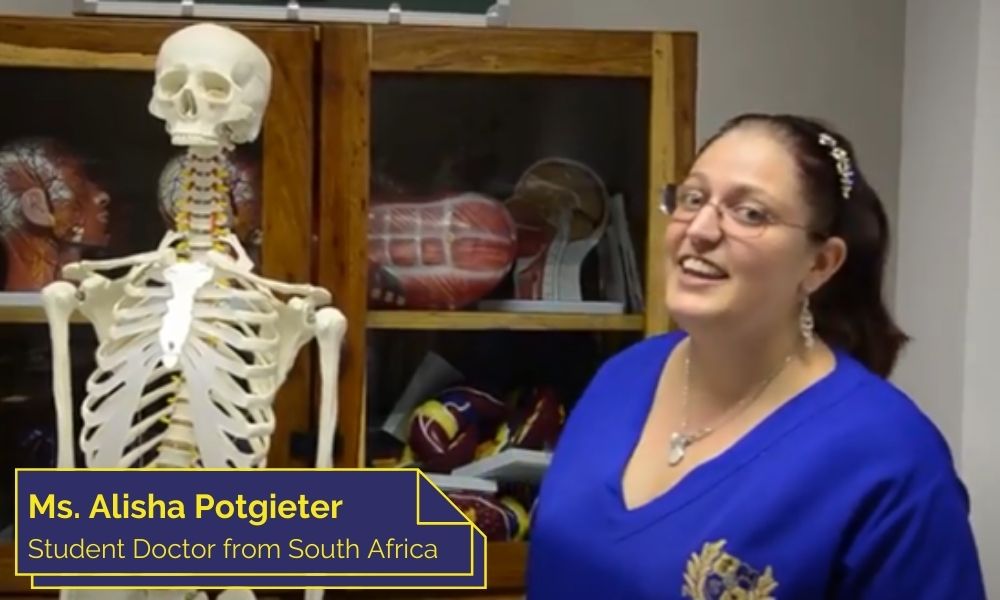
Texila American University has got students from South Africa and is excelling in their academics. Click here to read the learning experience of a South African student doctor, Ms. Alisha Potgieter.
With this excellent opportunity, which is easier to avail while it provides more value to students, it seems like a solid choice for aspirants who wish to become doctors and still not lose out on practicing in South Africa.
With that, we hope that you now know how to practice medicine in South Africa after completing MBCHB abroad and are inspired to do so yourself. Good luck!